

The Stardust opened on July 2, 1958, and its first sign was one of the most ambitious in the city. Designed by Kermit Wayne, it ran about 216 feet (66 m) across the front of the building and about 37 feet (11 m) high, with a 16-foot model of the Earth at the bend, acrylic planets and neon starbursts. Roughly 7,000 feet of neon tubing and 11,000 bulbs lit it up.
In February 1968 the resort added a freestanding pylon by the road: 188 feet (57 m) tall, designed by Paul Miller of the Ad Art company, with the name in jagged letters set against a cloud of stars and sparkles. The space theme on the building was removed in 1977, but the roadside sign stayed, and it became one of the most photographed in town.
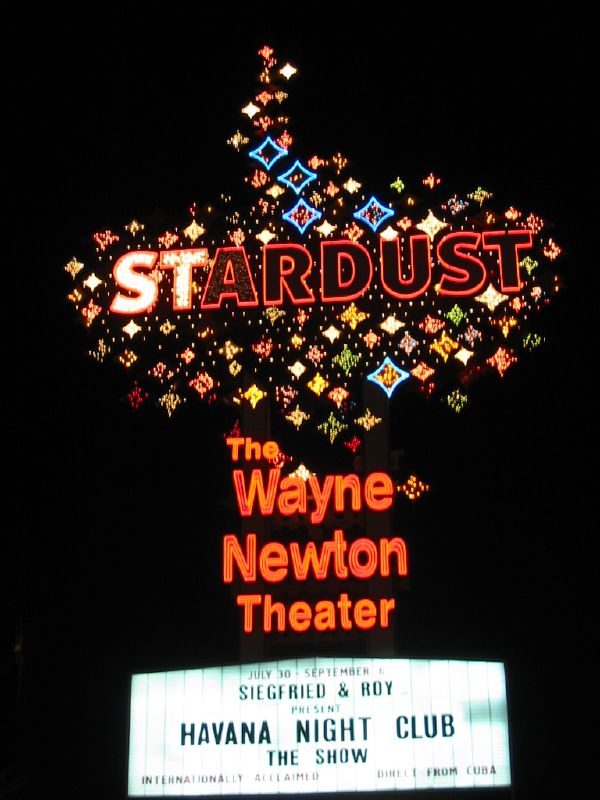

The Neon Museum also keeps a record of the pylon in motion. Charles Barnard, a designer at Ad Art who created many Las Vegas signs, donated a collection of photographs that includes a flipbook-style series, dated 1980, showing the Stardust sign's illumination sequence frame by frame. It is a reminder that these signs were designed as moving pictures, with timed flashers turning sections on and off, not as static logos.
In 1991 the pylon's lettering was swapped for a plainer Helvetica typeface. The original letters went to the Neon Museum. The Stardust closed on November 1, 2006, the pylon was taken down in early 2007 and given to the museum, and the towers were imploded on March 13, 2007.
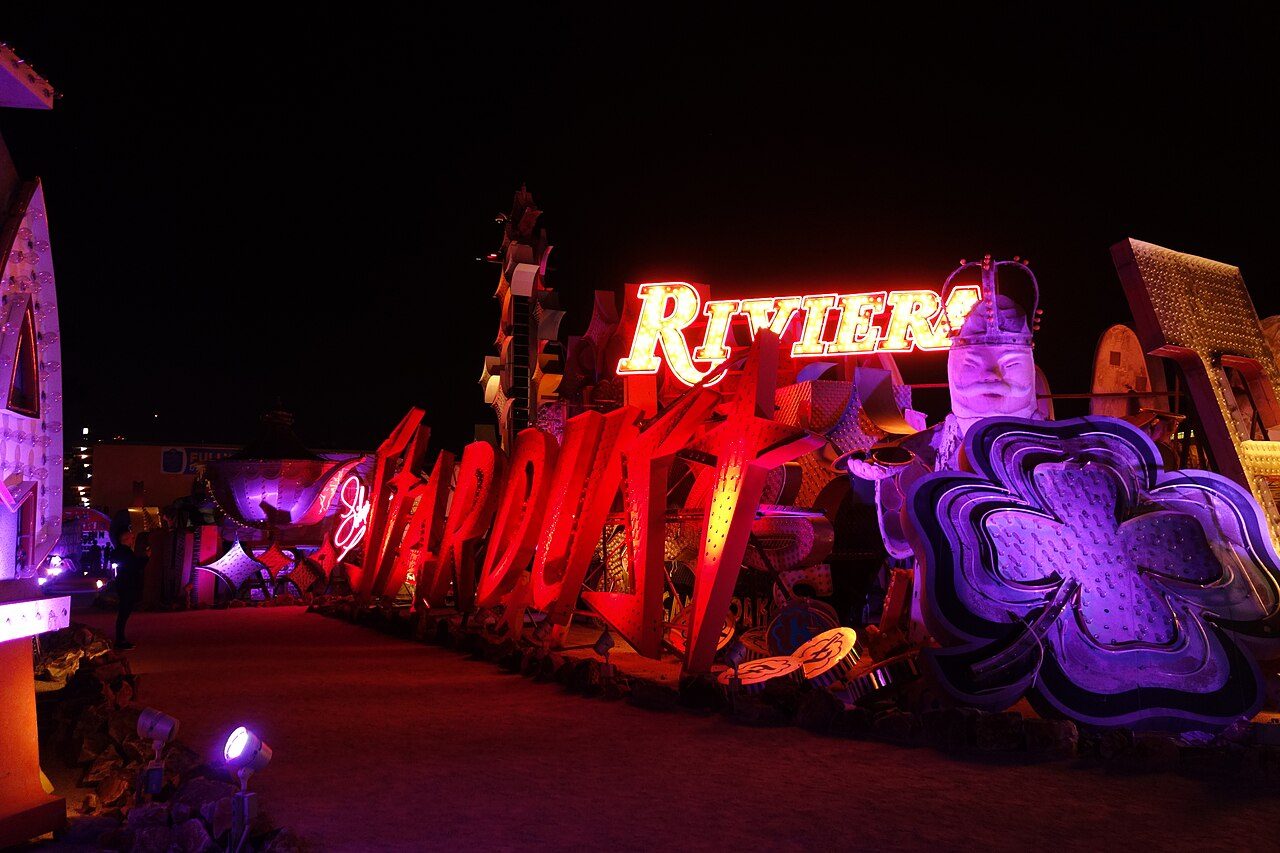
In March 2020 the museum announced that the eight big Stardust letters, each 14 to 18 feet (4.3 to 5.5 m) tall, had been re-lamped with more than 1,100 energy-saving bulbs and would light up daily in the Boneyard. Flasher mechanisms found during the work let them twinkle in sequence, much as they did on the Strip.
The site itself became Resorts World Las Vegas, which opened in June 2021 and pays tribute to its predecessor with an indoor sculpture based on the Stardust's roadside sign. Seeing both, the real letters in the Boneyard and the homage on the Strip, is a good lesson in how much the original relied on scale.
What to look for
- The eight Stardust letters in the Boneyard, each taller than a delivery truck.
- The jagged, starburst-edged letterforms, typical of 1960s space-age design.
- The bulbs flashing in sequence after dark.
- At Resorts World, the indoor sculpture inspired by the old roadside sign.
Timeline
- 1958The Stardust opens (July 2) with Kermit Wayne's façade sign.
- 1968The 188-foot roadside pylon by Paul Miller of Ad Art is installed in February.
- 1977The space-themed façade signage is removed; the pylon stays.
- 1991The pylon's lettering is replaced; the original letters go to the Neon Museum.
- 2006The Stardust closes on November 1.
- 2007Pylon dismantled and donated; towers imploded March 13.
- 2020Letters re-lamped and lit daily in the Boneyard.
- 2021Resorts World Las Vegas opens on the site.
Sources
- The Neon Museum: Stardust sign
- KSNV News 3: Stardust sign partially restored (2020)
- KTNV: Vintage Stardust sign lights up at the Neon Museum
- Las Vegas Advisor: When did neon arrive on the scene?
- Vital Vegas / Casino.org: Resorts World's Stardust sign
- Wikipedia: Stardust Resort and Casino
Uncertain or disputed
- The relit letters: Wikipedia says the original (pre-1991) lettering went to the museum and was refurbished in 2020; news reports of the 2020 relighting do not say which version the letters are.
- 1958 façade measurements and the 16-foot globe are from Wikipedia; the 11,000 bulbs and 7,000 feet of neon are confirmed by two sources.
- The 1968 pylon is called the largest freestanding sign in the world at the time by some sources; left out.
- No Wikidata item exists for the sign itself (Q202599 is the resort).